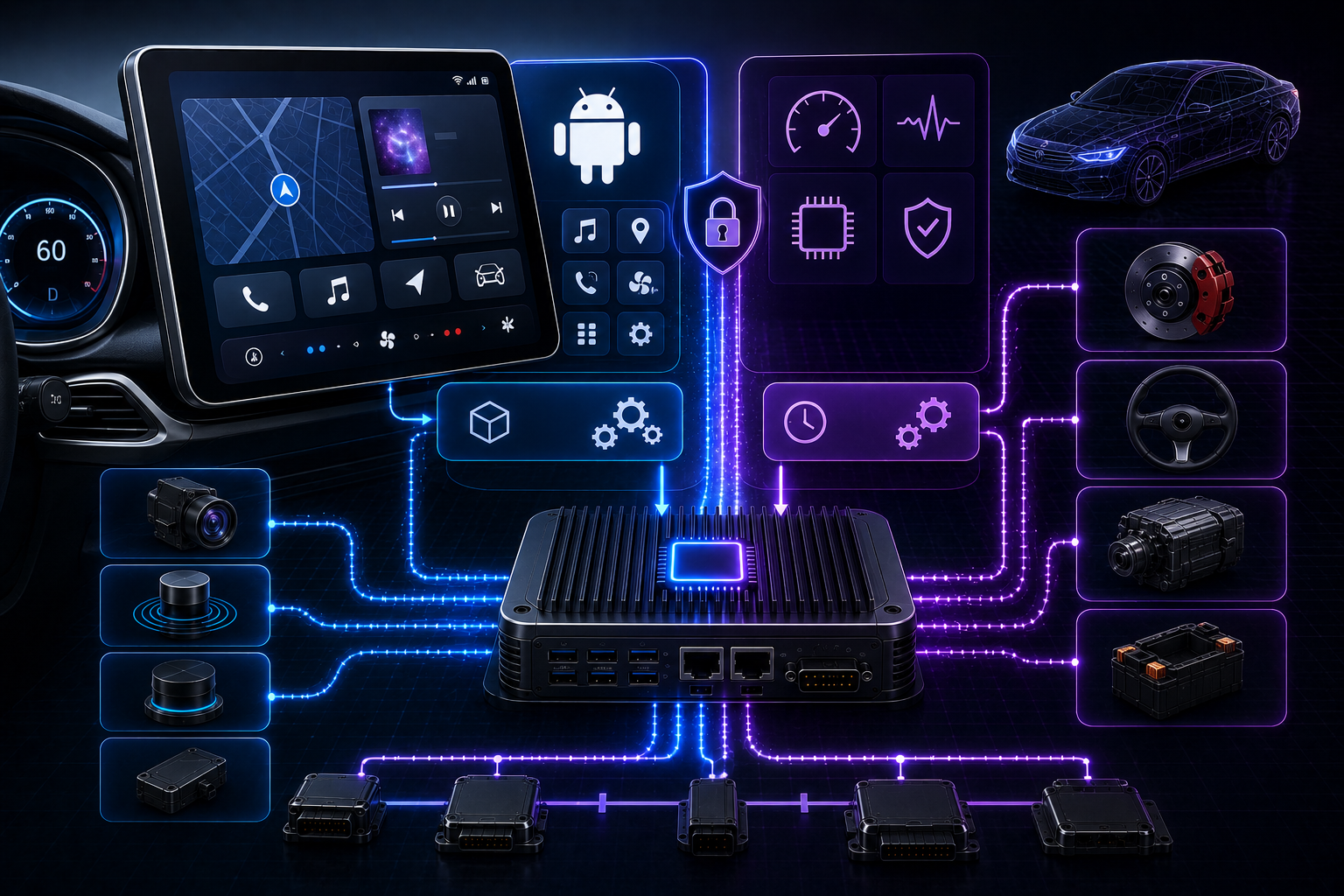
This research presents an architecture for integrating Android into next-generation automotive systems without giving it direct control over timing- and safety-critical vehicle hardware. Built on the Quest-V partitioning hypervisor, the system separates Android and the Quest real-time operating system into isolated environments while allowing them to communicate through secure shared memory.
Android provides the user-facing environment for infotainment and ADAS interfaces, while Quest manages predictable real-time communication with the vehicle’s CAN networks and critical components. The approach required only 126 lines of changes to Android 8.1 and allows Android applications to benefit from Quest's real-time I/O capabilities while maintaining hardware and memory isolation. Testing showed lower and more predictable CAN-message latency with Quest-V than with standalone Android.
Enter your details below to access the full research paper.